
Start with a gentle detangle before any wash
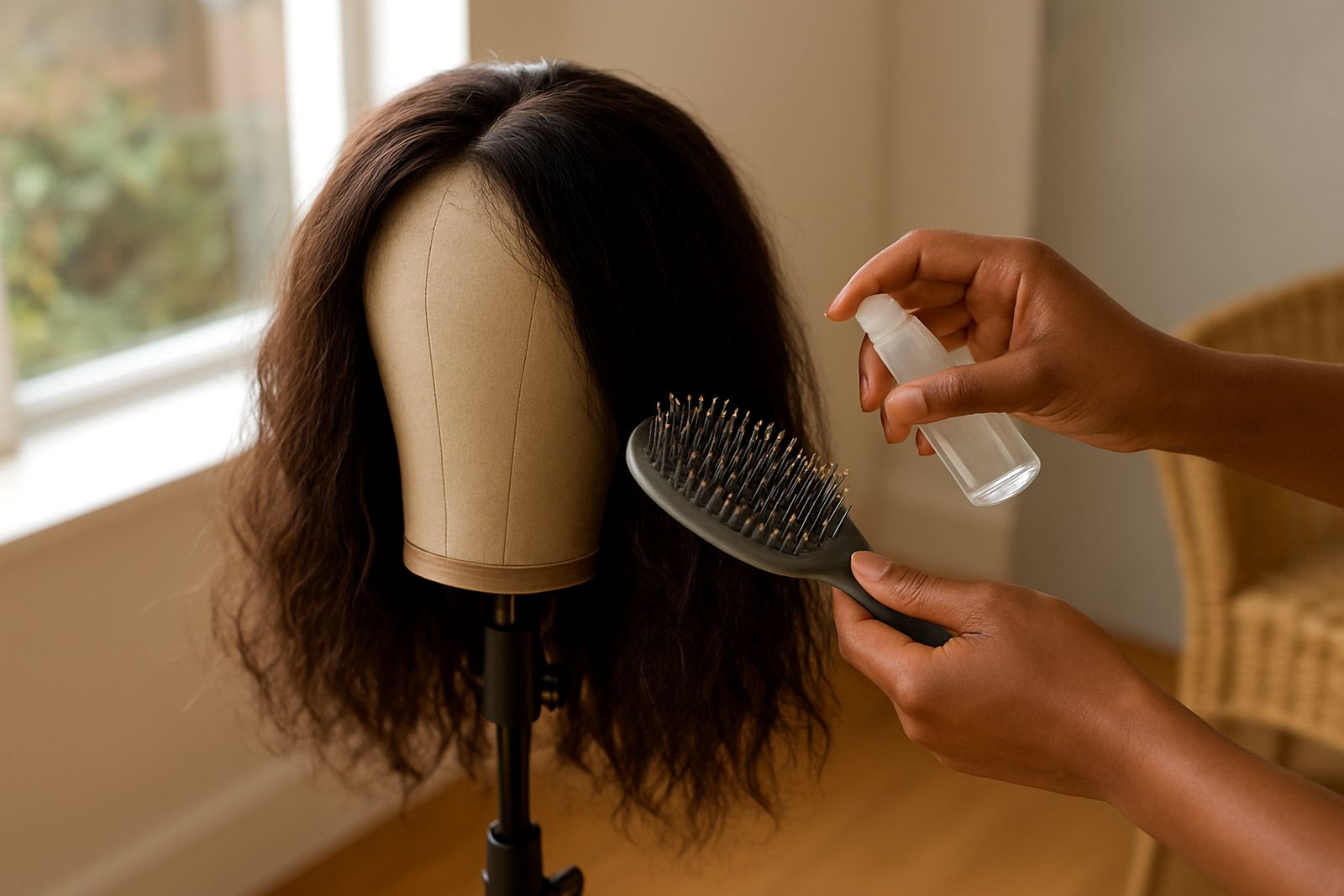
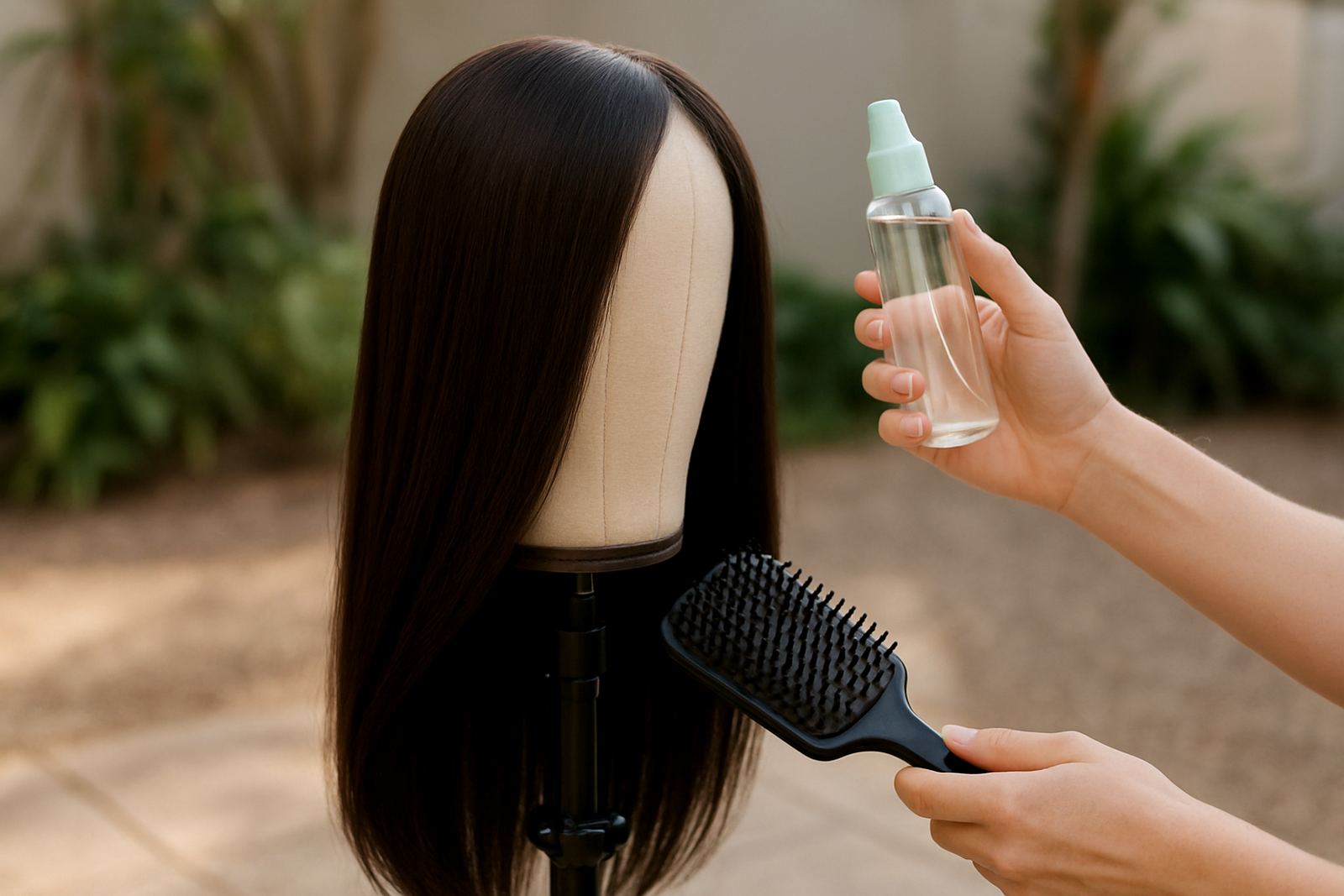
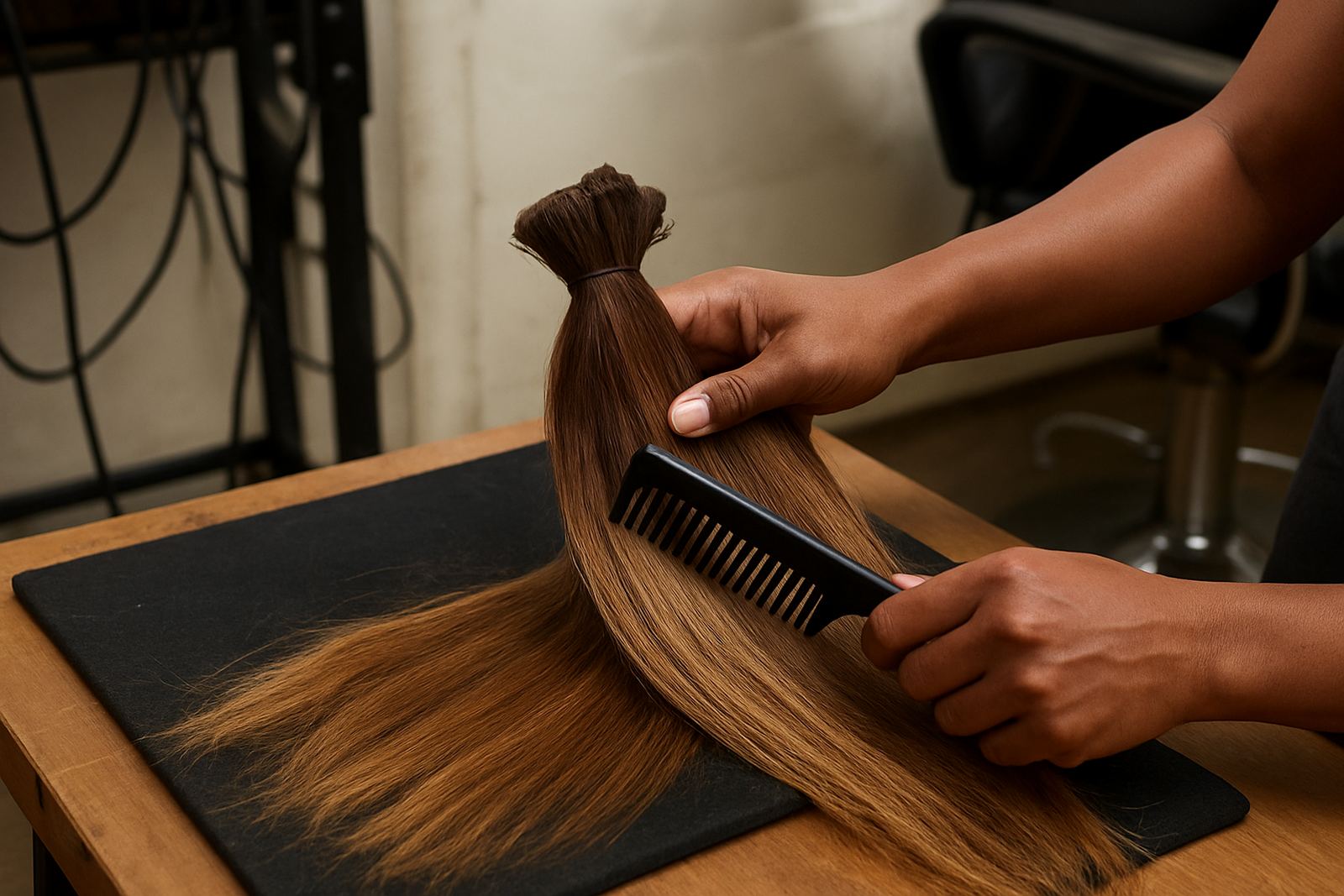
Before you add water, separate the curls with your fingers or a wide tooth comb while the wig is dry or only lightly misted. Work from the ends upward and hold the hair above each section so you do not pull at the cap. This matters especially for lace front wigs and fitted units because too much tugging can loosen the style and make the cap feel strained.
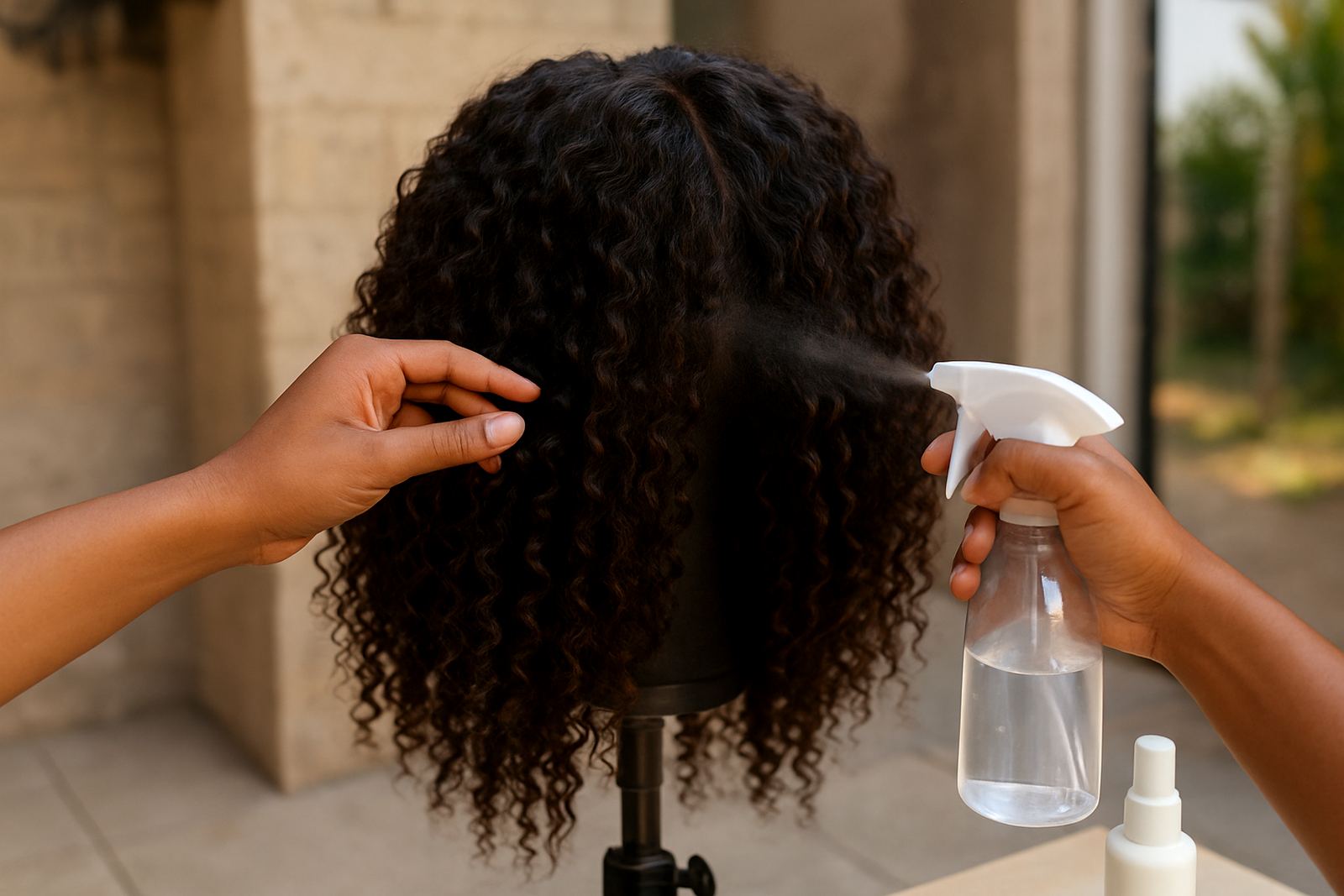
For curly wigs, the aim is not to remove every coil. You just want to clear shed hair, reduce knots and stop tangling from getting worse during washing. If the curls are very tight, use a little leave in mist or clean water in a spray bottle and take your time. A rushed detangle usually leads to frizz and breakage.
- Use fingers first, then a wide tooth comb if needed
- Never brush curls dry from root to tip
- Hold each section while detangling to reduce tension on the cap
- Focus on the ends, where tangles build up fastest
Wash with cool water and low friction
Fill a basin with cool or lukewarm water and add a small amount of gentle wig cleanser. Swish the wig through the water rather than rubbing the curls together. Hot water can roughen the fibre and make curl memory fade quicker, which is a problem in Durban humidity where styles already need extra control. If the wig has product build up from mousse, spray or edge gel, let it soak for a few minutes before rinsing.
When the wig is clean, press the water out with your hands. Do not wring it. That twisting motion can stretch the strands and cause a fuzzy finish. If the wig has lace, keep the lace area supported so it does not crease or tear.
- Use a basin, not a hard sink edge that can snag the lace
- Keep washing motions soft and downward
- Rinse until the water runs clear
- Press, never twist, to remove excess water
Condition in sections to keep curls soft
Curly wigs stay softer when conditioner is applied section by section, then combed through lightly with fingers. Focus on mid lengths and ends, because that is where dryness shows first. Let the conditioner sit for a few minutes, then rinse with cool water. If the wig is human hair, a richer conditioner can help after frequent heat styling. For synthetic curly wigs, use only products suited to fibre care so the curl pattern does not collapse.
After rinsing, blot the wig with a microfibre towel or clean cotton T shirt. This reduces frizz better than rubbing with a bath towel. If you live in coastal areas like Umhlanga, La Lucia or Ballito, the air can add puffiness fast, so keeping the fibres smooth at this stage makes a big difference.
- Apply conditioner from the mid lengths downward
- Detangle gently while the conditioner is in the hair
- Use a microfibre towel or cotton T shirt for blotting
- Avoid rough towelling that lifts the curl cuticle
Dry the wig in a way that protects curl shape
The best way to dry curly wigs is to let them air dry on a wig stand or mannequin head in a shaded room with good airflow. Strong direct sun can make fibres feel dry and brittle, especially when the wig is left near a window or on a car seat after an appointment in Durban traffic. If you need to speed things up because of load shedding or a tight schedule, use a cool setting only and keep the nozzle at a safe distance.
As the wig dries, gently shape the curls with your fingers. Do not keep touching it once it starts setting, as that creates frizz. If the wig has a defined curl pattern, scrunch the hair lightly from ends to roots to encourage bounce without flattening the style. Let it dry fully before wearing or storing it.
- Air dry on a stand whenever possible
- Keep away from direct heat, heaters and strong sun
- Use cool air only if you must speed up drying
- Do not store a wig while it is still damp
Refresh curls between wears without overloading product
Between washes, a curly wig usually needs a quick refresh rather than a full restyle. Mist it lightly with clean water, then add a small amount of leave in spray or curl cream if suitable for the fibre type. Use your hands to lift the curls back into shape and separate only the sections that have clumped together. Too much product can make the wig heavy and attract dust, which is common when you are travelling through busy areas or wearing the wig for event hair bookings.
If the wig is a lace front or fitted style, check the hairline and parting area while refreshing. A small amount of styling lotion can help, but keep it away from the lace knots unless the product is made for that area. For clip ins, make sure each weft is completely dry before packing it away after use.
- Refresh with water first, product second
- Use only a small amount of styling product
- Separate flattened curls by hand, not by brushing
- Check hairline, parting and cap fit before wearing again
Store curly wigs so they keep their shape
Good storage protects both the curl pattern and the lace. Place the wig on a stand, in a satin bag or in a box with tissue support so the curls are not crushed. If you are rotating between more than one wig, label each one by length, colour and cap size. That makes private consultation fittings, virtual consultations and home care much easier to manage later.
Keep wigs away from perfume, steam and bathroom humidity. In homes across Durban North, Phoenix, Westville and Hillcrest, bathrooms can stay damp for hours after a shower, so a bedroom cupboard or dressing room shelf is usually better. If you travel often, pack the wig in a protected container so the curl pattern does not flatten against clothes or headphones. Small habits like this help the wig last longer and save money over time.
- Store on a stand or in a satin bag
- Keep wigs dry, cool and out of bathroom steam
- Avoid heavy items pressing on the curls
- Label each wig for easier rotation and care