
Start with the right condition before you touch the hair
Never start detangling dry, tangled extensions straight after a full day of wear if they have product build-up or salt from coastal air. In Umhlanga, La Lucia and Ballito the humidity can swell the hair a bit, while load-shedding can make people rush styling with heat or rough brushing, which causes more knots. Give the hair a clean starting point first.
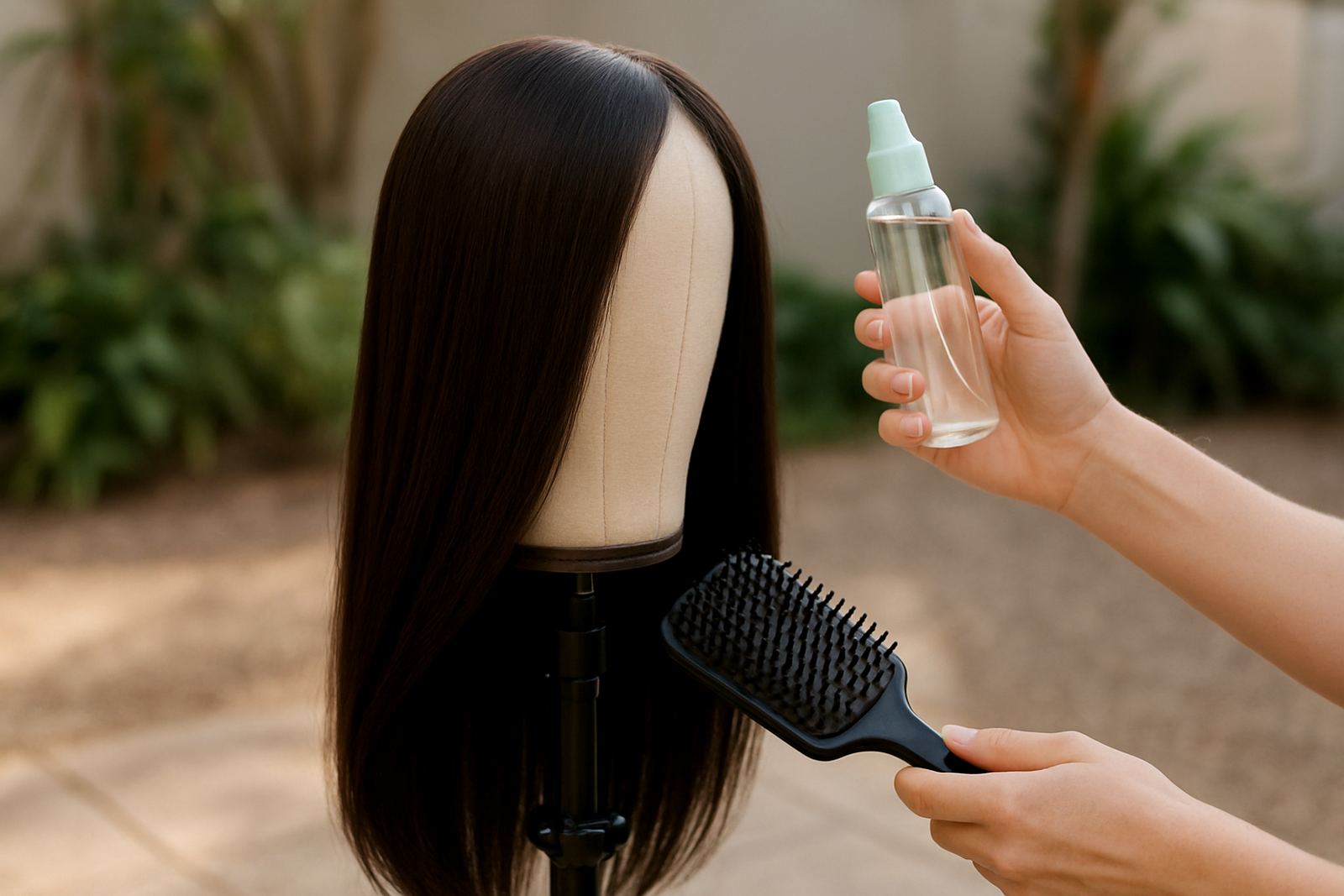
Lay the extensions flat on a clean towel or hold the wig on a stand. If you are working on clip-ins, tape-ins or a wig, make sure all clips, tabs or fastening points are secure so you are not pulling at loose sections. Lightly mist the hair with water and a small amount of leave-in conditioner, then let it soften for a minute or two before combing.
- Use a wide-tooth comb or a loop brush made for extensions
- Work in good light so you can see knots near the nape and ends
- Keep the hair slightly damp, not soaked
- Never yank through a hard knot in one pass
Work from the ends up, a little section at a time
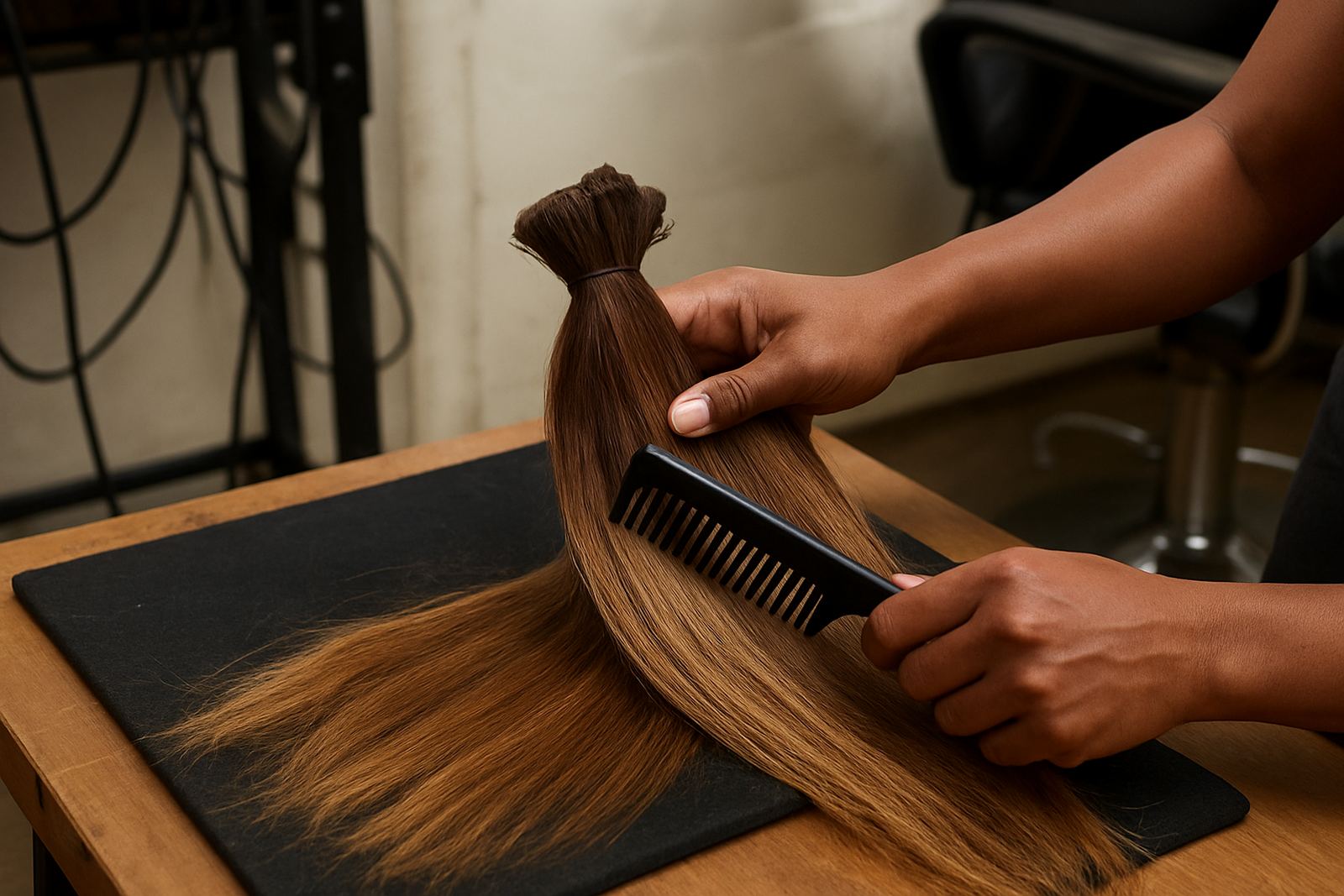
Most shedding happens when people grab the top and pull downward. The safer method is always from the ends upward. Hold one section of hair firmly near the middle so there is no tension on the root area or attachment point, then gently brush the last few centimetres first. Once that part is clear, move higher. Small sections are slower but they save the hair.
If the extension has a strong knot, separate it with your fingers before using a comb. Finger detangling gives you more control and helps you feel where the snag starts. If you force a brush through, you can lift fibres from the weft or weaken the strands around the lace. That often leads to thinning long before the hair should be replaced.
- Section the hair into 4 to 6 parts for a full wig
- For clip-ins, work on one piece at a time
- Hold above the knot to reduce pulling on the base
- Stop if you hear snapping or see excessive hair in the brush
Use the right products for the hair type and finish
Not every extension needs the same routine. Straight or body-wave hair usually needs less product than curls or textured styles, because too much spray can make it sticky and harder to separate. Use a lightweight detangling mist or diluted conditioner, and keep heavy oils away from the roots and tape areas. On tape-in fittings, too much moisture or residue can affect the hold.
For curly extensions, do not brush them out dry. Gently mist, use your fingers to separate the curls, then comb only when needed. If the hair was coloured or toned, treat it with extra care because processed hair can be more porous and prone to tangling. A little patience here goes a long way and it keeps the ends from looking rough.
- Choose lightweight leave-in products for daily care
- Avoid oils, serums and sprays near tape or lace bases
- Use a softer touch on coloured or bleached hair
- Always follow the natural curl pattern where possible
Check the base, lace and attachment points while you detangle
Detangling is the best time to inspect the condition of the hair and the base. Look for lifted tape, loose clip teeth, twisted tracks, frayed lace or a cap that is sitting too tight. If the attachment is under strain, the hair will tangle faster because the section is not moving naturally. This is especially important for clients commuting between Durban North, Westville and Hillcrest, where heat and daily wear can put stress on the style.
If you notice breakage around the crown or the nape, stop and adjust before it gets worse. A cap size adjustment, wig fitting or private consultation can help if the fit is causing repeated tangling. A proper fit often solves more than a new product ever will.
- Check for loose clips or tabs
- Look at the lace for fraying or lifting
- Make sure the hair is not rubbing against tight edges
- Note any section that knots in the same place each time
Aftercare that keeps the hair easier to comb next time
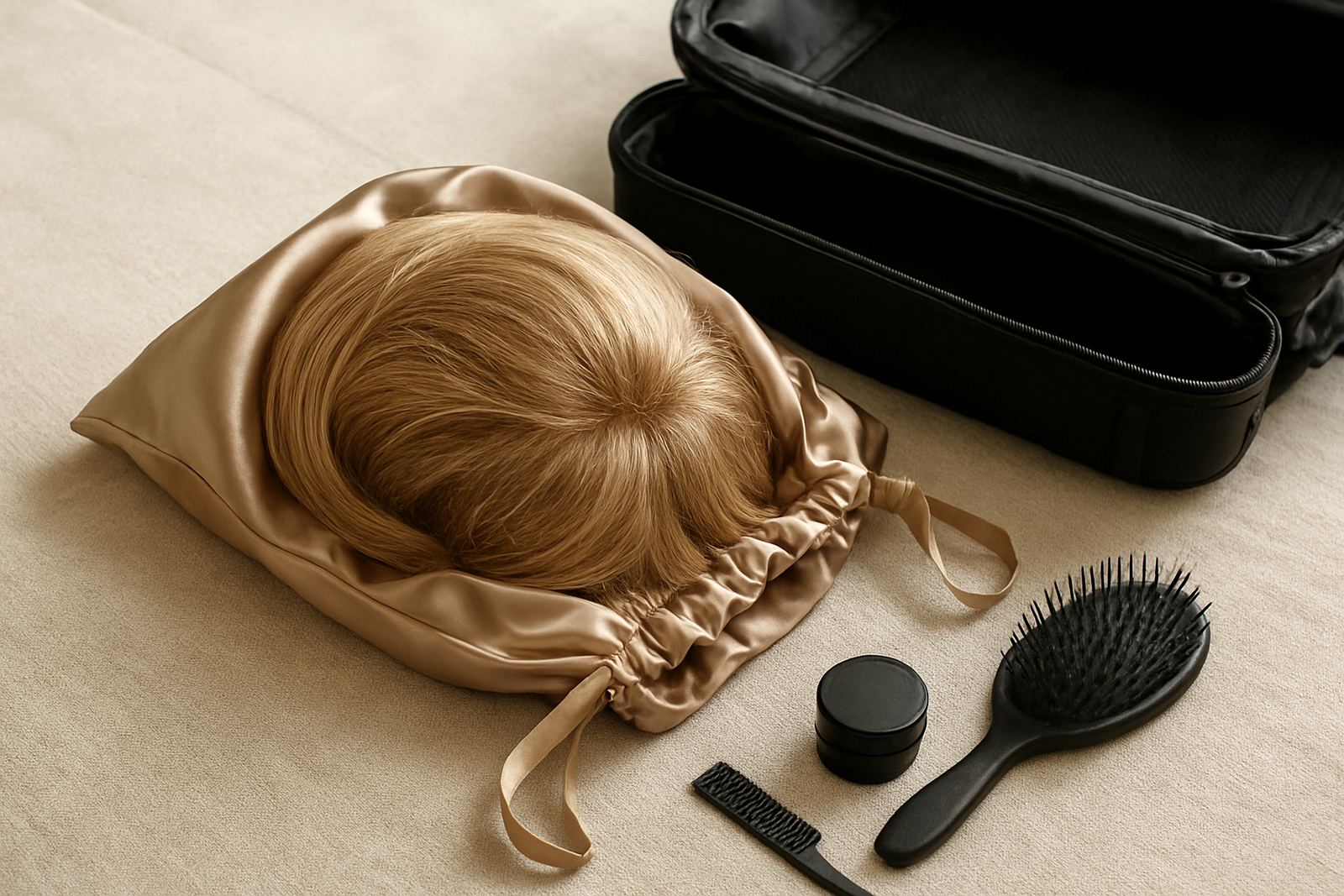
Once the hair is detangled, re-style it in a way that reduces friction. A loose braid at night, a silk scarf, or a satin bonnet can help keep extensions smoother between wears. If you are storing clip-ins, place each piece flat in a pouch or on a hanger so the fibres do not mat together. Do not shove them into a drawer, because that is where most preventable knots start.
Wig wearers should let the hair dry fully before storage, especially in humid coastal areas like Umhlanga and Amanzimtoti. Damp storage leads to musty smells and stubborn tangling. For regular wearers, a wig refresh every so often can bring back a softer finish and make the next detangle much quicker.
- Sleep with hair secured in a loose braid or bonnet
- Store pieces flat, dry and separated
- Let wigs dry completely before packing away
- Book a wig refresh if the hair is getting hard to manage
When to stop and get help from a consultant
Some tangles are normal, but if the hair is matted at the base, shedding in clumps or sticking at the lace, it is better to get professional help before you cause more damage. The same applies if a wig cap feels too small, a ponytail install is pulling, or a tape-in is starting to lift. For clients in Umhlanga, Durban North, Phoenix, Ballito and nearby areas, a proper fitting check can save a costly replacement later.
Bring the hair in if you are unsure whether it needs colour matching, lace customising, cap size adjustment or a full styling reset. A careful eye can spot what is fixable and what needs replacing. That makes the whole routine simpler and safer the next time you wear it.
- Heavy matting at the roots or lace
- Visible breakage after every wash or wear
- Fit problems that keep causing tugging
- Extensions that shed far more than normal