
Start with the feel of the wig, not just the look
The first signs are often small. The wig may still look fine on a hanger, but once it is on your head it no longer sits the same way. It may feel drier, tangle faster, or need much more styling to look neat before you leave the house.
In Durban’s humidity, older hair can swell, frizz and lose shape quicker than a newer unit. If you find yourself spending more time fixing the parting, smoothing the ends, or hiding rough sections, that is usually a sign the wig is past its best wear. A fresh wig should make your routine easier, not harder.
Watch for fibre damage, shedding and split ends
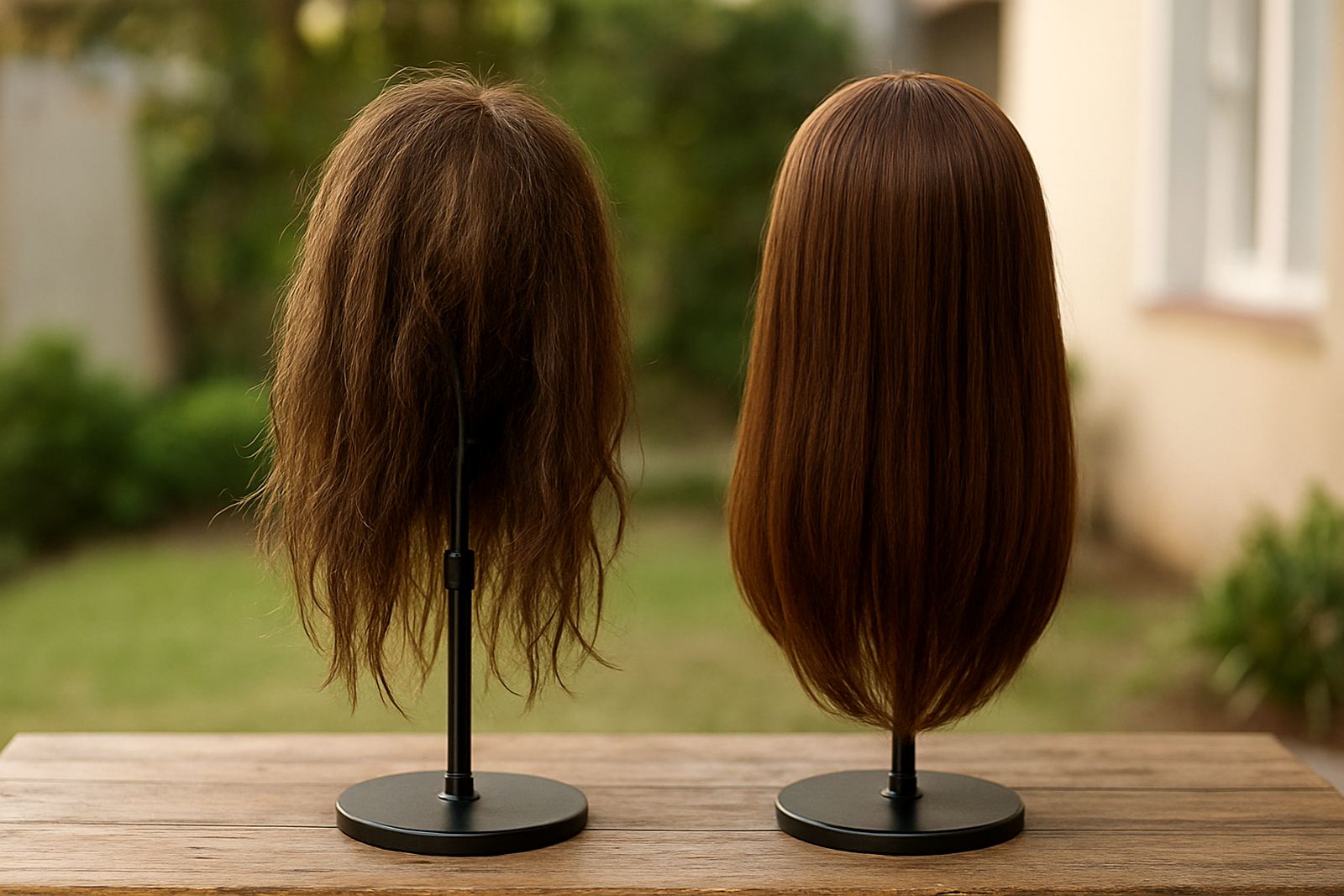
Hair that sheds heavily, goes thin at the crown, or develops split ends along the lengths is telling you something. Even with careful washing and storage, repeated heat styling, brushing and daily friction will eventually weaken the strands. Once the ends become wispy and the body of the wig loses fullness, repair only goes so far.
- Noticeable thinning around the hairline or parting
- Excessive tangling after only a few hours of wear
- Ends that stay rough even after conditioning
- Persistent shedding on clothing, pillowcases or the floor
If a wig is losing density in patches, it can start to look uneven on camera and in natural light. That is especially important for event bookings, office wear and everyday use where you want a tidy finish from morning to evening.
Check the cap, lace and fit before the hair lets go
Sometimes the hair is not the main issue. The cap can stretch, the lace can thin out, and the elastic or straps may stop holding their shape. Once the foundation weakens, the wig can shift, lift at the temples, or sit too flat at the crown. A wig that used to feel secure may start needing constant pinning or adjustment.
For clients in places like Umhlanga, La Lucia or Ballito, where wind and humidity can work against you, fit matters as much as finish. If the cap size no longer feels correct, or the lace has frayed so much that the front edge looks untidy, replacement is often the cleaner option.
When care routine changes but results do not
A good maintenance routine should give you some return. If you are washing gently, storing it properly, and limiting heat, but the wig still looks tired after every wear, the unit may simply be at the end of its useful life. This happens to both everyday wigs and special occasion pieces. You can restore softness and shape for a while, but not forever.
There is also a point where repairs cost more than they are worth. If the lace needs repeated fixing, the fibres keep matting, or the colour has faded unevenly, replacing the wig can save time and money in the long run. A new unit also gives you a cleaner base for colour matching and styling.
- Washing and conditioning no longer improve the texture
- Heat styling only masks the damage for a few hours
- The wig looks older than the rest of your outfit, even when freshly styled
- You are avoiding certain looks because the wig cannot hold them anymore
Know the difference between repairable and replaceable
Not every problem means you need a new wig straight away. Minor tangles, a loose comb, or a slightly dry finish can often be managed with proper care, trimming or a refresh. But if the wig has multiple issues at once, it is usually better to move on. That includes severe shedding, stretched cap construction, brittle fibres and damaged lace in the front or parting area.
A simple test is to ask whether the wig can still help you leave the house looking polished with normal effort. If the answer is no, or if you are only wearing it in low light because it does not look right in daylight, it is probably time to replace it. You should feel confident stepping into work, a wedding, or a church service without worrying about what the wig is doing.
A local example: what replacement can look like in Durban
Take a client in Westville who wears a wig for work most weekdays and for family events on weekends. At first, the wig still held a neat shape. After months of regular use, the ends became frayed, the parting lost its clean line, and the cap started to feel loose after a long day in the heat. She kept trying to revive it, but each wash left it a bit flatter and a bit drier.
In that kind of case, replacement is less about spending for the sake of it and more about getting back control of your appearance. A fresh wig can be matched to your current style, your face shape, and your daily routine. It also gives you a chance to choose a cap size or lace option that suits you better, which makes a real difference when you are moving between Umhlanga traffic, office hours and evening plans.
If you are unsure, a private consultation or virtual consultation can help you compare the condition of your current unit with what would work next. That way you do not replace too early, but you also do not keep fighting with a wig that has already given you its best days.