
Begin with the wedding date, then plan your hair steps backwards
When you are planning wedding hair, the first job is timing. A bride should start looking at wigs or extensions as soon as the dress, veil and overall style are taking shape, ideally 8 to 12 weeks before the wedding. That gives enough time for a private consultation, colour matching, fitting, any customising and at least one trial run.
If you leave it too late, you may still find something lovely, but you lose room to test the full look under real conditions. This matters in Durban especially, where heat, humidity and sea air can change how hair sits through the day. A style that looks perfect in a cool fitting room may need a few adjustments once you move, dance and spend time outdoors. Even small changes like cap size or parting placement can make a big difference.
At Hair Fair, brides from Umhlanga, Durban North, La Lucia, Ballito and farther afield often come in after they have chosen the dress, and that is the right sequence. Once the neckline and fabric are set, it is much easier to choose hair that works with the whole outfit. The earlier you start, the more options you keep open.
Choose hair that suits the dress, not only the photo
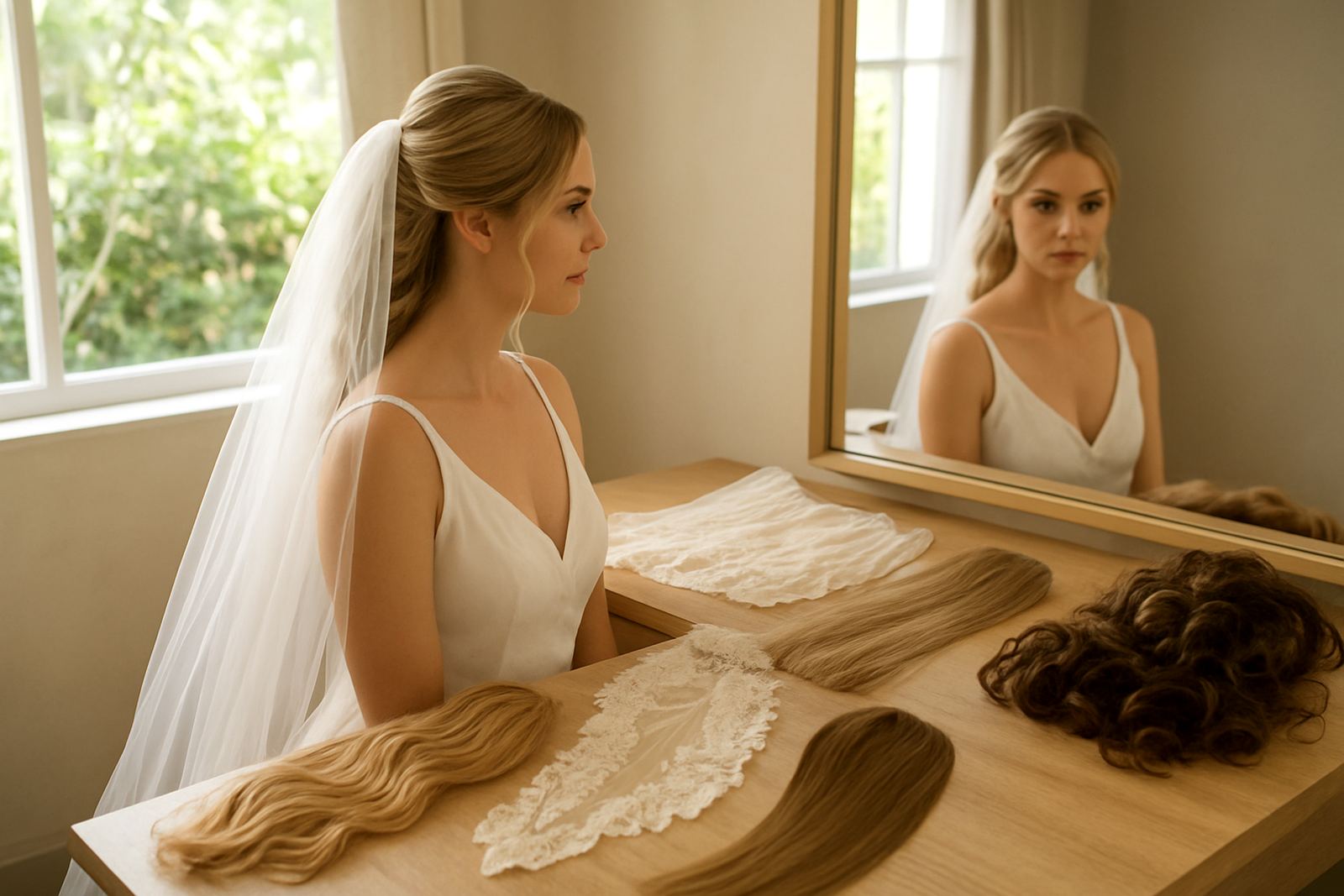
Wedding inspiration pictures are useful, but the hair must suit your dress, your face shape and how you want to feel on the day. A lace front wig can give a polished finish if you want structure and full coverage. Clip-ins work well if you want to add length or volume to your own hair while keeping a natural feel. Tape-in fitting can be ideal when you want a softer blend for a longer wear period before the wedding weekend.
Think about the neckline and accessories before you choose anything. A high neckline may call for hair that sits up or back. A detailed back of dress can need a style that does not hide the detail. If you are planning a veil, headpiece or hair jewellery, the fitting should include those items as well. It is not enough to only try hair on its own.
- Bridal hair should balance the dress neckline and back detail.
- Loose styles need to stay secure through dancing and weather changes.
- Coverage and comfort matter just as much as length and volume.
- If you want curls or waves, plan for a style that will hold through the full day.
Use the trial to test colour, comfort and movement
A proper trial is where you find out if the chosen piece really works. Colour matching should be checked in natural light, because indoor lighting can make shades look warmer or cooler than they are. A brunette blend may look perfect in the boutique and slightly different once you step outside into bright coastal sun. That is why a consultant should look at the tone against your skin and your natural hair together, not in isolation.
Comfort is just as important. If you are wearing a wig or add-on piece for many hours, the fit must be secure without feeling tight. You should be able to blink, smile and move your head normally. During the trial, ask how the style behaves when you turn, bend and lift your arms. If you plan to wear it from ceremony to reception, the hair needs to last through photos, hugs and a long evening. You do not want to keep fiddling with it every ten minutes.
For brides in coastal areas like Umhlanga and Ballito, a trial also helps with practical choices such as texture and finishing products. Light, airy styling often works better than something overly heavy. If your wedding is in summer, the plan should include how the hair will handle humidity and possible load-shedding during the prep window at home or at the venue.
Build in time for customising and backup planning
Many brides need small adjustments before they are fully happy. That may include lace customising, cap size adjustment, wig styling or a shift in length. These are normal parts of bridal preparation, not a problem. The mistake is leaving them for the final week. A few days is not enough if a piece needs more than one change or if you want to compare two options.
It is also smart to have a backup plan. If you are using extensions, keep extra pieces nearby in case you want more volume for the reception. If you are wearing a wig, ask about a refresh before the wedding day and whether the style can be prepped in stages. For destination weddings or ceremonies in hot venues, a second option can give peace of mind. That is less about being fussy and more about avoiding last minute panic.
- Allow time for any lace work or cap adjustment.
- Book styling after the final dress fitting if possible.
- Keep a small emergency kit with pins, a comb and touch up products.
- Ask what can be done in advance and what should only be done on the day.
Match the hair plan to the wedding location
A beach ceremony in Durban North is not the same as a church service in Westville or a garden venue in Hillcrest. Wind, heat and humidity all affect how long hair holds. That is why the location should shape the choice. For a summer event near the coast, a secure style with controlled movement may be better than something too soft and loose. For an indoor evening reception, you may have more freedom with volume and length.
Also think about travel. If you are getting ready in Amanzimtoti and heading to a venue in Umhlanga, your hair should be prepared in a way that survives the drive without flattening. If you are doing a virtual consultation first, have your dress photos, inspiration images and any headpiece details ready so the advice is practical from the start. We often see brides who want one look for the ceremony and another for the reception, and that can work very well if it is planned early.
For local brides, a simple rule helps: the more variables your day has, the earlier you should confirm the hair. Venue, weather, transport and timing all affect the final result. Sorting it out early gives you room to breathe, and that is worth a lot in wedding planning.
A simple bridal timeline that works
If you want a clear plan, use this as a guide. About three months before the wedding, book your consultation and start looking at options. Six to eight weeks before, confirm the chosen wig or extensions and complete any customising. Two to four weeks before, do the trial with your dress details and accessories. In the final week, keep the style set aside, cleaned and ready for the appointment or collection. That sequence leaves enough space for changes without rushing.
At Hair Fair, our team in Umhlanga works with brides across Durban and beyond, including private and virtual consultations for those who cannot come in often. The aim is simple: choose hair early, test it properly and make sure it supports the day rather than adding stress. Wedding hair should feel like one less thing to worry about, not one more thing on the list.
When the hair is planned well, everything else comes together more calmly. You look like yourself, only finished, and that is usually the best bridal result. Sometimes the smallest early decision saves the most trouble later.