
Start with a clean wig and a gentle squeeze
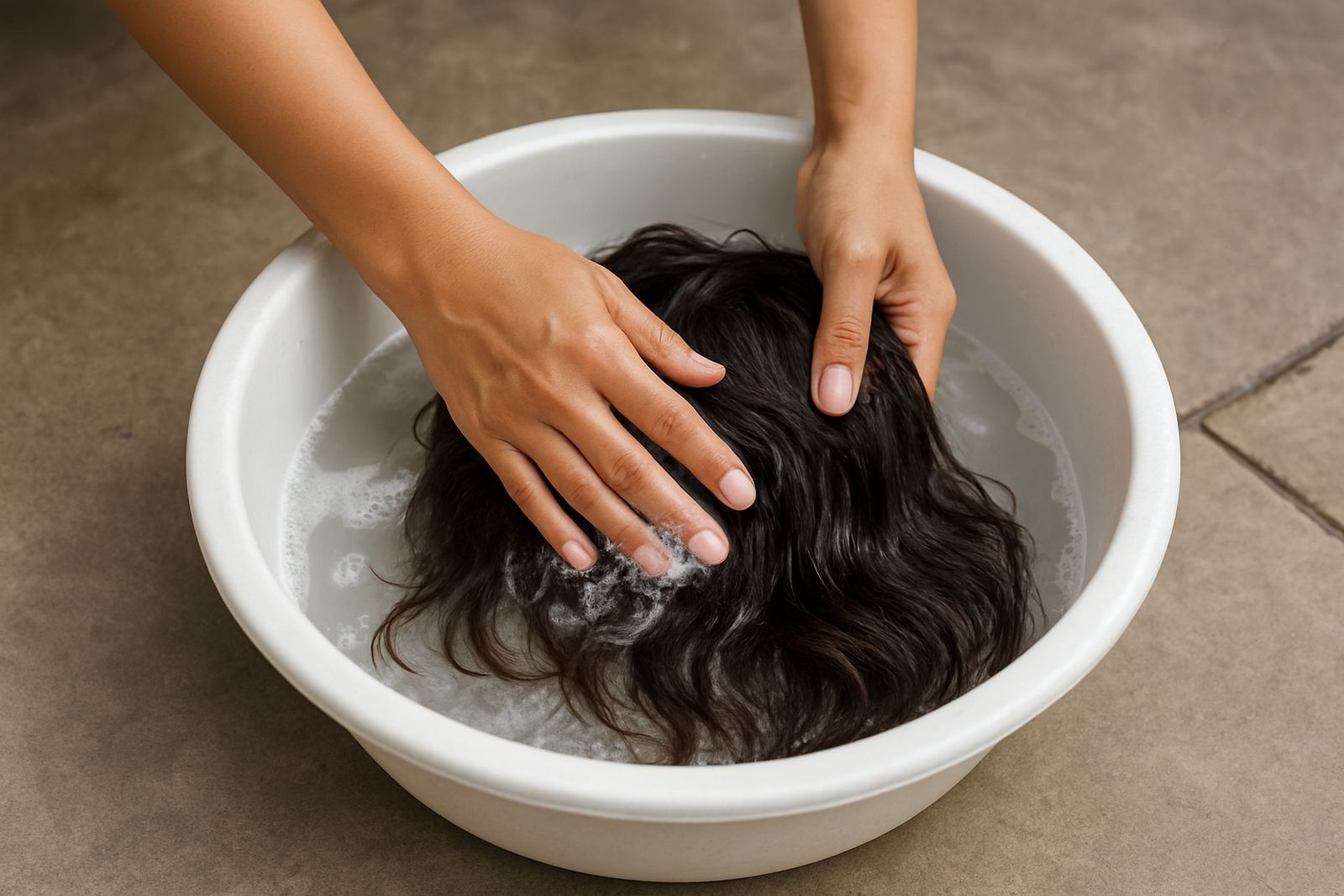
Before you dry a wig, make sure the washing stage is finished properly. Rinse until the water runs clear, then support the wig from the ends and press out extra water with your hands. Do not wring, twist or hang it from the lace, because that puts strain on the cap and can change the fit over time.
For both wig types, the safest first step is to blot the hair with a clean towel. Use a light pressing motion from roots to ends. If the wig is very saturated after a cold wash, leave it on a towel for 5 to 10 minutes so the water can drain away before moving on.
- Hold the wig by the cap, not by the lace front.
- Blot gently with a microfibre or soft cotton towel.
- Keep the fibres aligned in the natural direction of the style.
- Never rub the hair together, it creates tangles fast.
Choose the right drying method for the fibre
Human hair wigs and synthetic wigs dry in slightly different ways. Human hair can take more heat, but too much heat still dries out the cuticle and shortens the life of the hair. Synthetic hair usually needs low heat or no heat at all, depending on the fibre used. If you are unsure, air drying is the safest starting point.
For a human hair wig, you can use a blow dryer on a cool or low setting with the wig on a stand. Keep the airflow moving and stay a few centimetres away from the hair. For synthetic styles, follow the care label carefully. High heat can melt fibres, leaving them shiny, stiff or permanently bent. In Durban humidity, a wig may feel dry on the outside but still hold dampness inside the cap so give it enough time.
- Human hair: low heat or cool setting only.
- Synthetic: air dry unless the fibre is heat friendly.
- Keep the dryer moving, do not park it in one spot.
- Avoid hot bathroom steam while the wig dries.
Dry the cap and lace properly so the fit stays neat
The cap is often the part that gets overlooked, yet it matters just as much as the hair. If the inside of the cap stays wet, it can hold odour, slow down drying and put stress on the lace. Turn the wig inside out only if the structure allows it, then let the inner cap air dry on a stand with good ventilation.
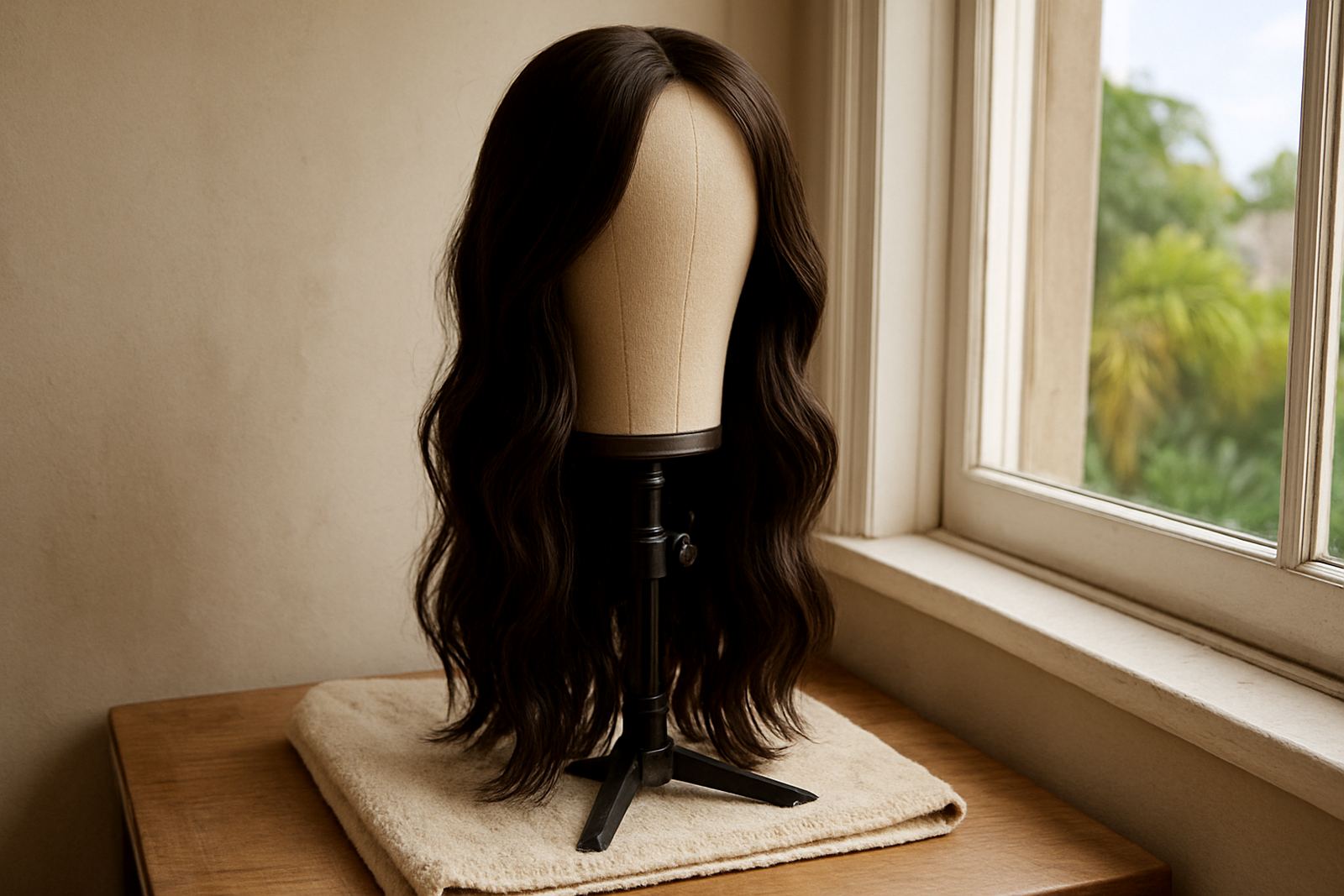
Make sure lace fronts are handled with care. Pat the lace flat with a towel, then let it dry naturally without stretching it over a narrow object. A proper wig stand helps the parting dry in shape. If the cap feels tight after drying, check whether water has collected near the ear tabs or nape. A little extra drying time now saves trouble later.
- Let the cap breathe from the inside as well as the outside.
- Keep lace flat and supported, not pulled tight.
- Use a wide wig stand for even drying.
- Check the ear tabs and nape before storing or styling.
How to air dry a wig without losing shape
Air drying is simple, but the setup matters. Place the wig on a stand in a clean room with moving air, away from direct sunlight. Strong sun can dry out human hair and fade coloured pieces, while a closed room traps moisture and encourages a musty smell. In coastal areas like Umhlanga and Ballito, a fan on low speed is often more useful than leaving the wig in a humid bathroom.
Comb or finger detangle only after the hair is mostly dry. Starting too early can pull at the strands and stretch the style. If the wig has curls or waves, scrunch the ends gently and let the pattern set naturally. For straight styles, smooth the hair downward with your fingers so the finish stays neat and even.
- Place the stand in a shaded, ventilated space.
- Keep the wig away from heaters and direct sun.
- Use a fan if the weather is damp.
- Only detangle once the wig is nearly dry.
Drying mistakes that shorten wig life
Many wigs are damaged during drying, not during wear. The most common mistake is rough towel rubbing, which causes frizz and breaks the style pattern. Another is using high heat because the hair looks like it is taking too long to dry. This can dry out human hair and damage synthetic fibres in one go. Avoid placing a wet wig on painted surfaces or over thin chair backs too, as this can mark the cap and change its shape.
It is also a mistake to store a wig while the inside is still damp. Even a small bit of moisture can create an unpleasant smell, especially when the wig is kept in a closed bag during a load-shedding delay. If the power goes off, just leave the wig in a safe airy place and continue later rather than rushing the process.
- Do not wring, twist or squeeze hard.
- Do not use high heat to speed things up.
- Do not pack away a wig that still feels cool and damp inside.
- Do not dry on a narrow hook or stretch the lace front.
Quick drying checklist before styling or storage
Before you style, brush or store a wig, run through a fast check. The hair should feel dry from root to tip, the cap should be cool to the touch and the lace should sit flat without wet spots. If the wig will be worn soon after drying, let it rest for a few minutes so the fibres settle before you start heat styling or parting the hair.
For regular wearers, a simple drying routine keeps maintenance easier and protects your investment. If you are not sure how a wig should dry after a wash, a private consultation can help you choose the safest method for the fibre, length and cap construction. Some styles also benefit from a wig refresh or cap size adjustment after repeated wear, especially in warm weather.
- Hair fully dry, including the underside layers.
- Cap and lace completely dry with no cool spots.
- Parting and crown sitting in shape.
- No tangles or rough patches before storage.