
Why accurate head measurements matter
Wig fit is not only about looks. It affects comfort, movement, and how natural the hairline appears once the unit is on. A cap that fits well helps reduce slipping at the nape, pressure at the temples, and the need to keep adjusting it during the day.
In Durban and Umhlanga, where humidity can rise quickly and coastal air can make the scalp feel warm, fit matters even more. A slightly loose cap can lift when you are walking in the wind, while a cap that is too snug can feel sore by midday. If you wear your wig for work, church, events, or daily errands, taking the time to measure properly saves a lot of hassle later.
It also helps if you know your measurements before choosing between a lace front, a closure wig, or a fuller style with more hair density. The same size does not always suit every construction, so the numbers guide the fit and the style choice together.
What you need before you start measuring
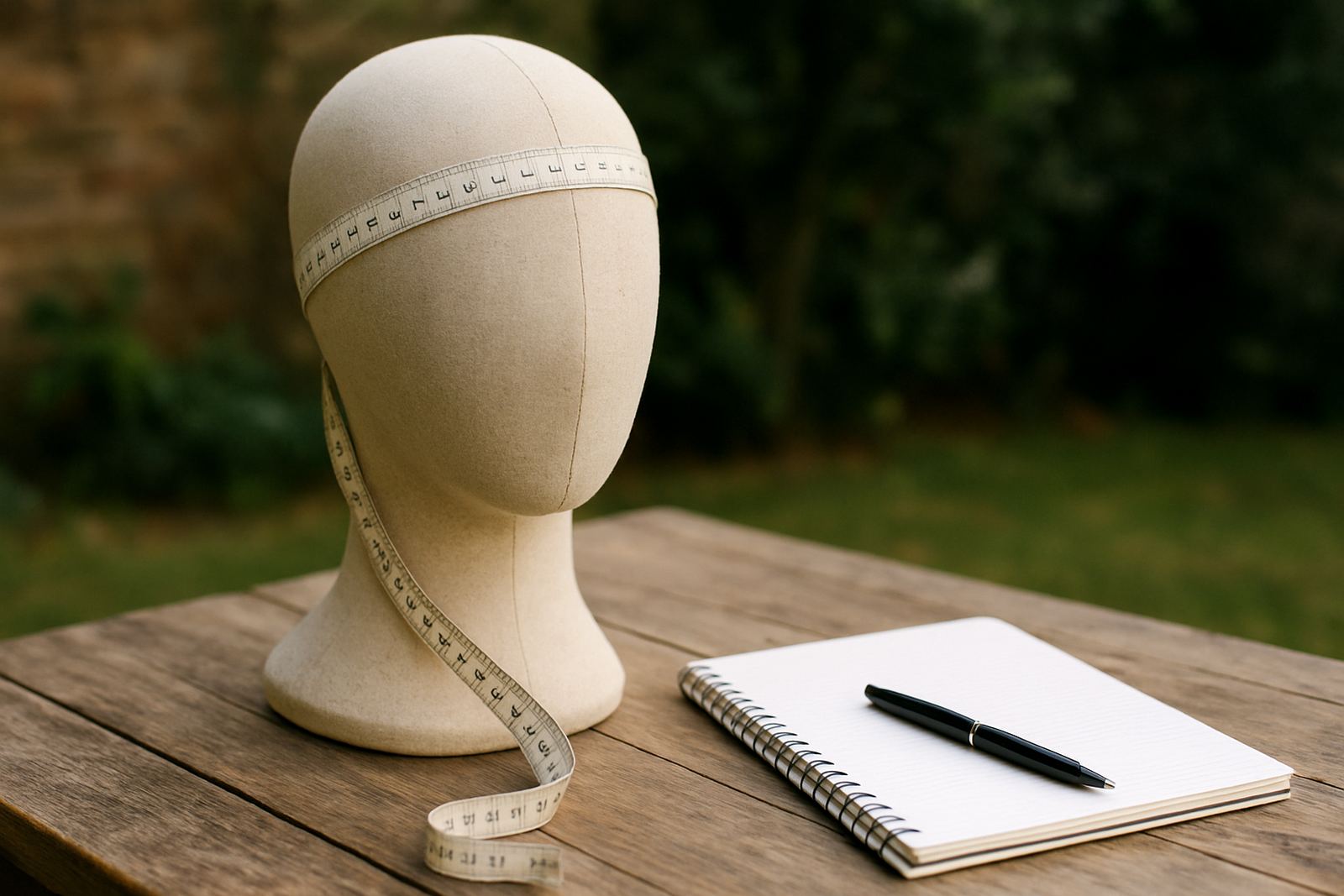
You only need a few simple items. Keep the process calm and unhurried, and if possible ask someone to help so the tape stays level all the way around.
- A soft measuring tape, the type used for dressmaking
- A mirror or another person to check placement
- A pen and paper, or your phone notes
- Your natural hair in the same condition you will wear under the wig
If you usually wear cornrows, a low bun, braids, or a cap under your wig, measure your head in that same setup. That gives a more honest result. For example, measuring loose hair and then wearing a braided base later can change the fit by more than you expect.
Make sure the tape is flat, not twisted, and do not pull it too tightly. You want a firm measurement, not one that squeezes the head. A good fit should feel secure, not tight around the edges.
The four core measurements to take
Most wig fittings start with four main measurements. These are the numbers that help with cap size and overall comfort, especially if you prefer a custom fit or are choosing between small, medium, and large caps.
- Front to nape: measure from your hairline at the centre of the forehead to the lowest point at the nape
- Ear to ear across the front: measure from one side hairline to the other, passing over the top of the forehead
- Ear to ear over the top: measure from one ear to the other across the crown
- Temple to temple around the back: measure from one temple, around the back of the head, to the other temple
These four measurements give a strong picture of the head shape and where the wig needs to sit. Some clients have a narrower forehead with a fuller back head shape, while others have a flatter crown or a smaller nape. That is normal. The aim is not to force the head into one size, but to find the cap that follows the natural shape well.
When you write the measurements down, note them in centimetres. In South Africa that keeps things simple and consistent when you are speaking with a consultant or booking a private fitting.
How to take the measurements correctly at home
Start with your hair as you normally wear it under a wig. Place the tape at the centre of the front hairline, then bring it around the head without letting it ride up. For the ear-to-ear measurements, keep the tape level so it does not slide over the forehead or droop at the back.
Check the mirror from the side if you can. It is easy to angle the tape too high, especially when measuring alone. If that happens, the number may look fine on paper but the wig can sit oddly once worn. Keep the tape at skin level where possible, and repeat each measurement once to confirm it.
If your hairline has receded slightly or you have a sensitive scalp, do not measure from the very edge of fragile skin. Start from the point where the wig will actually sit. That makes the fit more practical and more comfortable.
Remember to breathe normally while measuring. It sounds small, but if the tape is pulled too tightly while you are tensing your shoulders, the numbers can come out smaller than your real fit. A fraction of a centimetre can matter on a lace front or glueless cap.
Common fit problems and what they usually mean
If a wig feels wrong after measuring, the issue is not always the size label. Sometimes the cap shape, hairline depth, or adjustment straps need attention. A good fit is about balance across the whole head.
- Too much tightness at the temples: the cap may be too small, or the front measurement was taken too high
- Sliding at the nape: the cap may be too large, or the back measurement is shorter than expected
- Ear tabs lifting: the ear-to-ear over the top may need checking again
- Hairline sitting too low: the front-to-nape number may be off, or the wig is positioned too far forward
In our experience, many first-time wearers think they need a larger cap when they actually need a better strap adjustment or a more accurate measurement. Sometimes a small cap size adjustment makes a bigger difference than changing the whole style. That is why consultation helps, especially if you are between sizes.
If you are buying for a special event in Durban North, La Lucia, Ballito, Westville, Hillcrest, Phoenix, or Amanzimtoti, allow time for a fitting before the day itself. Trying to sort the fit on the morning of an event is risky and usually leads to avoidable stress.
When to book help with fitting or customising
Home measurements are a good start, but some clients benefit from professional fitting, especially if they wear wigs often or want a precise finish. This is useful if you have hair loss, a very small or large head size, a sensitive scalp, or if you want the unit adjusted for a particular style such as side parting, ponytail wear, or secure glueless use.
At Hair Fair, clients often ask for help with wig fitting, lace customising, wig styling, colour matching, wig refresh, cap size adjustment, and private consultation. A virtual consultation can also help if you are based farther out and want guidance before couriering your order nationwide. The aim is to make sure the wig suits both the measurements and the way you actually live in it.
For a first wig, it is often worth writing down your measurements, taking a photo of how your hair is set underneath, and sending through your questions with the enquiry form. That gives a clearer starting point for advice, and it can save you from ordering the wrong cap size. Small details matter, because comfort is what makes a wig wearable day after day.