
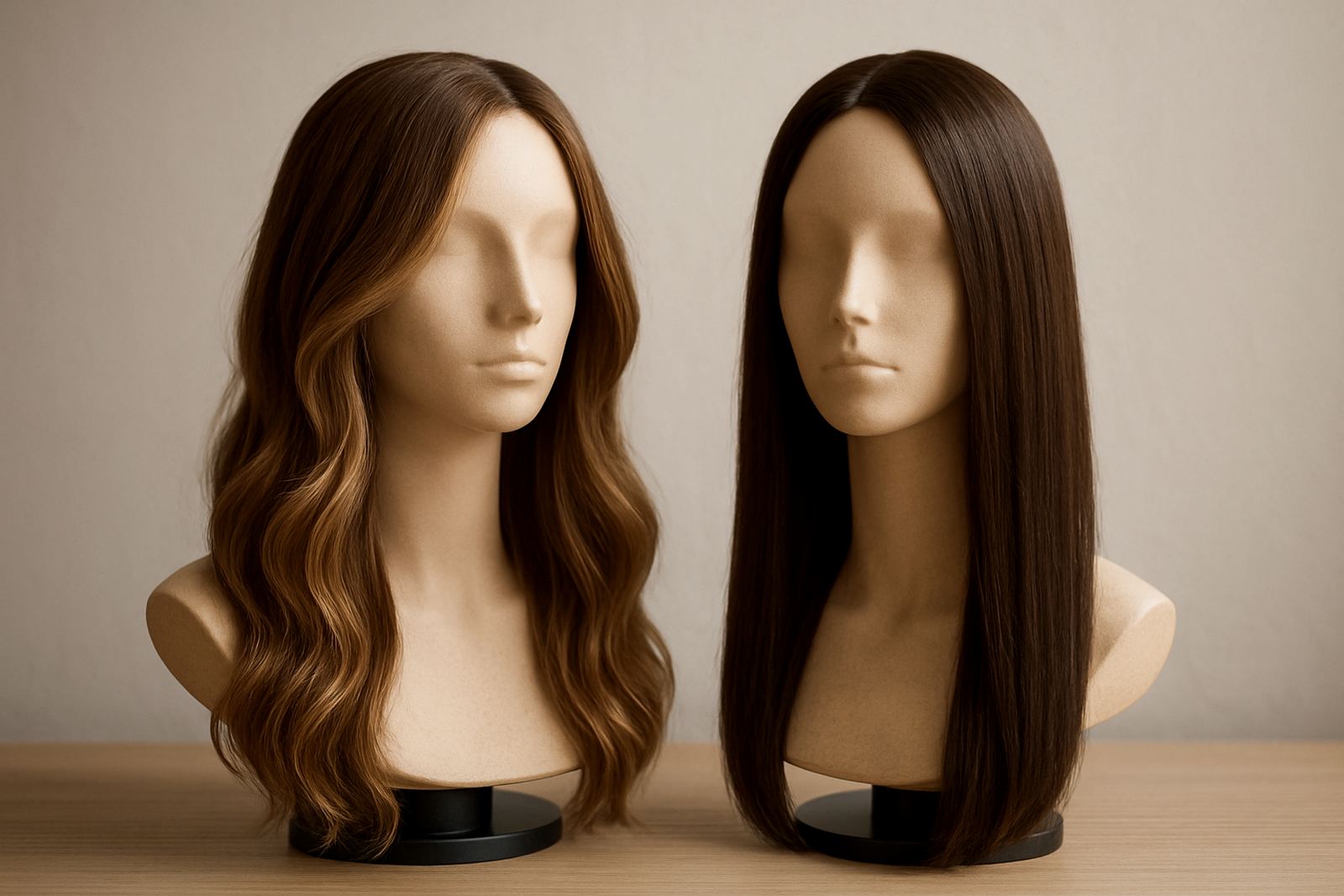
Start With How Often You Will Wear It
The first question is simple: will this be an everyday piece, a special occasion style, or something in between? Human hair wigs and extensions suit clients who want regular heat styling, colour changes, and a very natural finish. Synthetic options suit people who want an easy ready-to-wear look with less daily effort and lower cost.
In Umhlanga and across Durban, many clients come in wanting one piece for school runs, office days, church, and weddings. That usually means thinking about time, weather and budget together. If you want to wash, dry, curl and restyle often, human hair gives you more freedom. If you want something that holds its shape and does not ask for much, synthetic can be the practical choice.
- Choose human hair if you want heat styling, colour changes, and a softer natural movement.
- Choose synthetic if you want low-maintenance wear and a style that keeps its shape.
- Choose based on your weekly routine, not only the first day look.
What Human Hair Gives You That Synthetic Cannot
Human hair wigs and extensions are usually preferred by clients who want the closest match to natural hair behaviour. They can be washed, conditioned, blow-dried, straightened and curled, depending on the quality and care routine. This makes them a strong choice for lace front wigs, custom styling and colour matching when you want a personalised finish.
They also tend to handle blending better, especially if you are leaving out some of your own hair or working with a specific parting. For events, photos, and long-term wear, the extra control can be worth the higher price. The trade-off is maintenance. Human hair needs proper washing, gentle detangling, heat protection and storage. If you live near the coast, the moisture in the air can mean more frizz on certain textures, so a good upkeep plan matters.
- Best for frequent styling and parting changes.
- Better for custom cuts, tinting, and softer blending.
- Usually lasts longer with careful maintenance.
Where Synthetic Hair Makes Sense
Synthetic wigs have improved a great deal, and for many buyers they are the sensible option. They are often lighter on the pocket, which helps if you need a few looks for different occasions. Some styles come pre-shaped, so you can put them on and go. That is useful for early mornings, school runs, or clients who do not want to spend time with hot tools.
They also hold a set style well. If you like neat curls, a bob, or a defined finish that stays put, synthetic can be dependable. The main limit is heat and restyling. Many synthetic fibres do not tolerate high temperatures, and once the style changes or tangles badly, repair is limited. For coastal areas like Durban North, Ballito and Amanzimtoti, a synthetic piece can still work well if you keep it clean, covered, and stored correctly after use.
- Often the better option for occasional wear and tighter budgets.
- Good for preset styles that do not need daily heat.
- Lower upkeep, but less flexibility than human hair.
How Durban Weather Changes the Decision
South African weather should be part of the decision, especially on the coast. Humidity in Durban can affect curl pattern, volume and frizz, while strong sun can dry out both human hair and synthetic fibres. A client in La Lucia may want a sleek finish for meetings, while someone in Hillcrest may prefer a fuller style that still looks neat after a long day.
For human hair, the weather means you may need more moisturising and occasional smoothing. For synthetic, the shape may stay in place but the finish can look less forgiving if the fibre is exposed to heat or rough handling. If you commute, work outdoors, or move between aircon and heat often, tell your consultant what your day looks like. That helps with choosing density, texture and cap construction. A good fit matters too, because a cap that shifts or feels tight will not wear well through a full day.
- Humidity can increase frizz on human hair and flatten some synthetic styles.
- Sun exposure can dry out both types, so storage matters.
- Cap fit and texture choice are just as important as the fibre itself.
Budget Is Only Part of The Real Cost
It is easy to compare the ticket price and stop there, but the real cost includes maintenance, how often you replace the piece, and whether you need extra services like wig fitting, lace customising, cap size adjustment, or colour matching. Human hair costs more upfront, yet it may last longer if cared for properly. Synthetic costs less upfront, but may need replacing sooner if it is worn often.
Think of it this way: if you wear a piece once a month for events, synthetic may give excellent value. If you wear it most weekdays and want to restyle it, human hair may pay off better over time. At Hair Fair in Umhlanga, we often see clients bring in older pieces for wig refresh and styling help because the original choice was not matched to how they actually live. That is avoidable when you plan ahead.
- Count the purchase price plus care products and maintenance time.
- Ask how often you will wear the piece before deciding.
- Factor in fitting and customising if comfort is important.
A Practical Choice Guide for Real Life
If you still feel stuck, use this quick test. Human hair is usually the better pick if you want flexibility, a very natural movement, or regular heat styling. Synthetic is usually better if you want a fuss-free look, a lower spend, or a style that stays the same without much effort. Neither is automatically the right answer for every person.
A Durban client coming in for a private consultation might say she needs one wig for office days in Westville, another for weddings, and a quick option for travel. In that case, a mix can make sense: one human hair piece for styling freedom and one synthetic piece for easy backup. That is often the smartest way to build a small collection without overspending. The key is choosing pieces that suit your actual week, not just the first mirror check.
- Buy human hair for versatility and long-term styling control.
- Buy synthetic for convenience, value, and preset shapes.
- Consider owning both if your routine changes from work to events often.