
Why overnight care matters more than most people think
Extensions do most of their work during the day, but a lot of wear happens at night. Turning over on a pillow, rubbing against cotton, or sleeping with loose hair can cause matting at the mid lengths and stress at the attachment points. That is where the real damage starts, not in one dramatic moment but in small repeated friction.
If you live in Durban or anywhere along the coast, humidity can make the problem worse. Hair can hold moisture longer, which means it can swell slightly, tangle faster, and feel heavier by morning. A simple bedtime routine makes a noticeable difference, especially if you wear clip ins, tape in fittings, ponytail pieces, or a lace front wig.
The aim is not to baby the hair endlessly. It is to keep the fibres smooth, keep the attachment secure, and stop avoidable strain on your own hair underneath.
What feels comfortable enough to sleep in
Comfort depends on fit. A proper installation should feel secure without pinching or tight pulling. If you feel sore at the scalp, have pressure near the temples, or cannot sleep on your back without discomfort, something needs adjusting before bedtime becomes a problem.
Wigs are often the easiest to manage overnight if they are removed and stored properly, but some people do sleep in them for short periods when the fit is correct. Clip ins should usually come out before bed. Tape in hair can be slept in, but only if the sections are neat, dry, and not being tugged loose. Ponytail fittings and other attached pieces also need care to avoid stress on the root area.
- Never sleep with wet or damp extensions if you can avoid it
- Do not tie the hair too tightly at the crown or nape
- Check for rubbing at the ears, hairline and back of the neck
- If you wake with headaches, the fit is probably too tight
A good fitting should let you rest normally. You should be aware of the hair, but not distracted by it all night.
The bedtime routine that reduces tangles
The main rule is simple: keep the hair smooth, secure and dry. Before bed, brush gently from the ends upward using a soft bristle or extension safe brush. Hold the hair at the mid lengths while you work so you do not pull on the roots or fittings. If you have curled or styled the hair during the day, give it a light reset rather than leaving it loose to knot overnight.
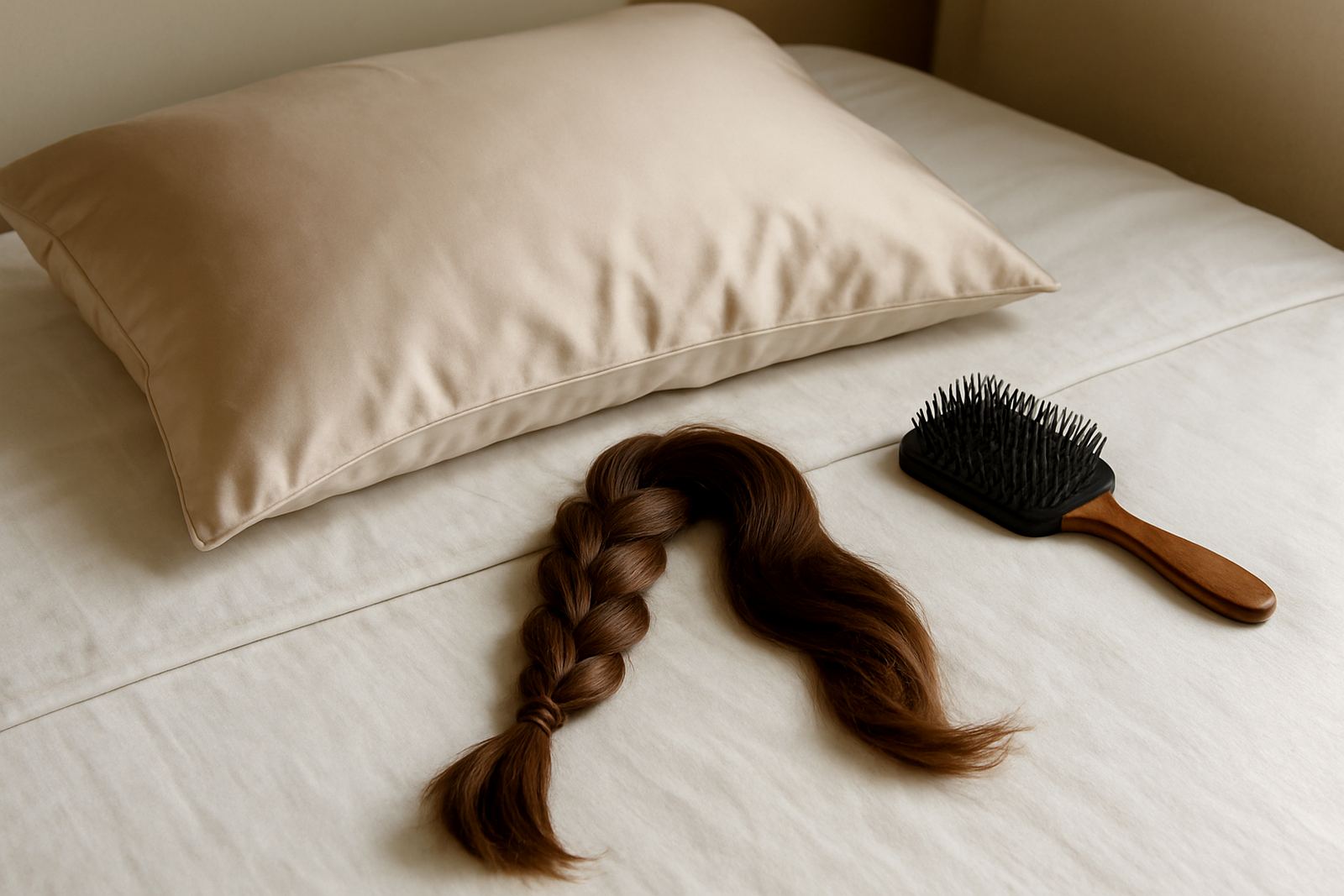
A satin bonnet or satin pillowcase helps more than most people expect. Cotton creates friction, which is one of the main reasons extensions look rough by morning. If your hair is long, braid it loosely or put it into one soft plait, depending on the type of extension and how your stylist recommended you wear it.
- Brush before bed and again in the morning
- Separate the hair into one or two loose sections if it is long
- Use a satin bonnet, scarf or pillowcase
- Keep a small detangling spray for morning touch ups
A light night routine takes a few minutes and saves you from a much bigger repair session later.
How to handle different extension types at night
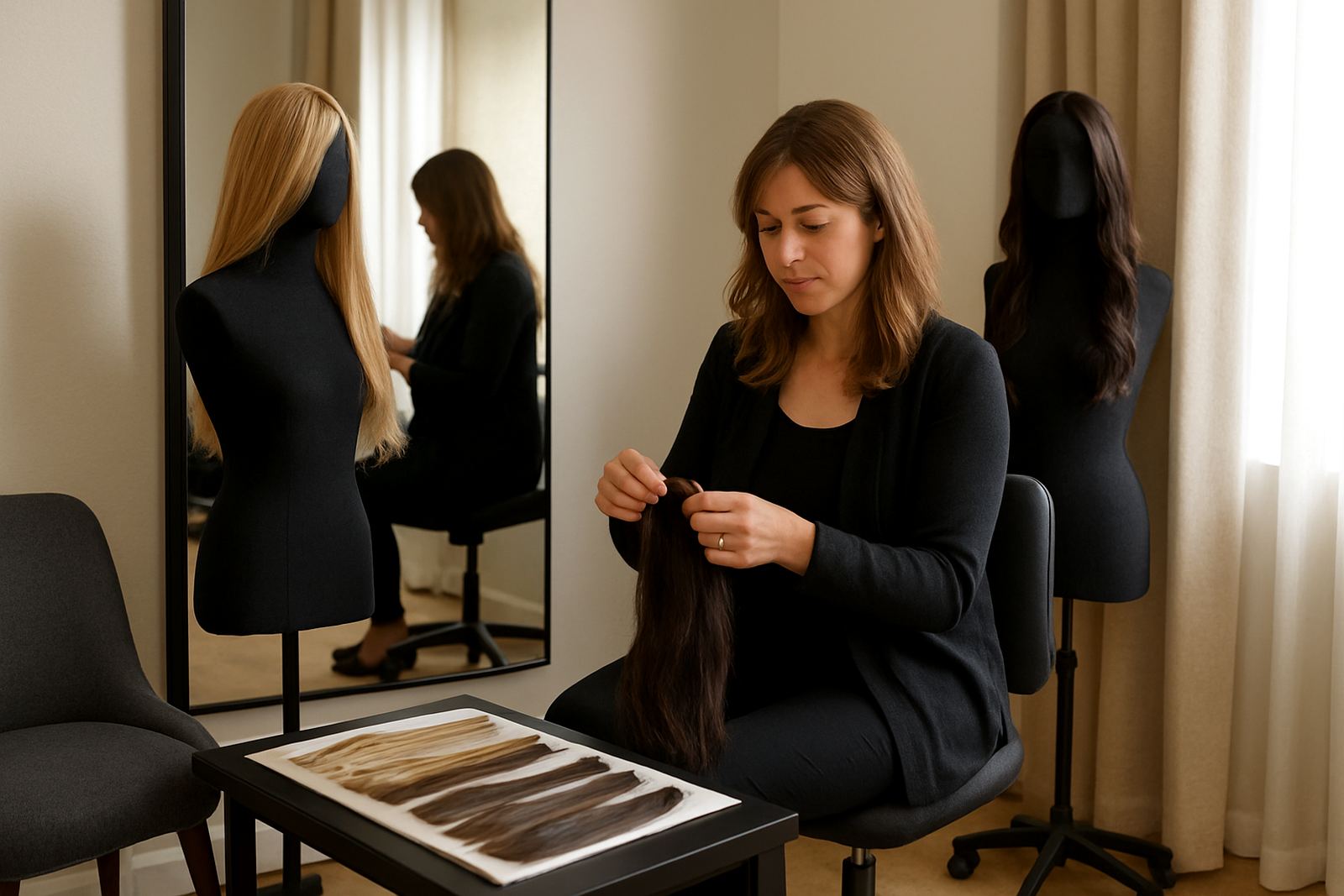
Not all extensions sleep the same way. Clip ins are usually best removed before bed, cleaned if needed, and stored flat so they do not tangle in a drawer or basket. Lace front wigs should also be removed when possible, then placed on a stand or in a silk bag to hold their shape. Tape in or fitted methods may stay in place, but they still need protection from tugging and excess moisture.
If you wear a wig regularly, the cap size and fit matter a great deal. A cap that is too loose shifts while you sleep. One that is too tight leaves marks and can make the front line lift or rub. In Umhlanga and the wider Durban area, many clients also notice that evening humidity and air conditioning affect how the fibre behaves overnight. A style that seems fine at 8 pm can feel different by morning, so the fitting and storage routine should match your daily life.
It helps to follow the product specific advice you were given at fitting, rather than copying someone else’s routine. A style that works for a Ballito school run will not always suit a late night event in Westville or a weekend away in Hillcrest.
Signs you are sleeping in extensions the wrong way
If the hair looks worse every morning, your overnight routine is probably the reason. Some damage is obvious, like knots at the nape or visible frizz around the ends. Other signs are more subtle and show up as recurring shedding, loosened tape, or sore spots on the scalp.
Watch for these warning signs:
- Repeated tangling at the back of the head
- Hair that feels dry and rough even after brushing
- Pulling sensation at the roots when turning in bed
- Loose fittings or shifting sections after sleep
- White residue or product build up near attachment points
If you see these issues more than once or twice, the solution may be a better fitting, a different extension method, or a change in night care. Do not keep forcing the same routine and hope it improves on its own. Small problems become expensive repairs if left too long.
How to care for extensions after a rough night
There will be mornings when the hair is not perfect. That is normal. The goal is to recover it gently, not attack it with heat and heavy products. Start by separating tangles with your fingers, then use a brush suitable for extension hair. Work from the ends upward and avoid yanking at any bonded or taped area.
If the hair feels dry, a light leave in product can help, but use a small amount. Too much product weighs the hair down and can make it greasy at the roots. If you wear your hair regularly for work, events or school runs around Durban North, La Lucia, Phoenix or Amanzimtoti, keep a small care kit in your bag so you can tidy the style during the day instead of building up tangles.
When the hair needs a deeper refresh, book in for a check. That is especially useful if your wig needs styling, your cap needs adjustment, or your colour match no longer sits quite right after some wear. A quick professional reset can extend the life of the hair and keep it looking natural for longer.
When to choose a consultation instead of guessing
If you are not sure whether you can sleep in a certain extension type, ask before you commit to a routine. The right answer depends on your hair texture, the condition of your own hair, how often you wear the piece, and whether you prefer comfort over long wear. A private consultation or virtual consultation can save you from buying the wrong method for your lifestyle.
At Hair Fair in Umhlanga, many clients want one thing above all else: a style that looks good and still feels manageable by the next morning. That is a practical goal, not a luxury. If you need help with wig fitting, lace customising, wig styling, colour matching, clip in install, tape in fitting, ponytail fitting, wig refresh or cap size adjustment, it is worth getting proper guidance before sleep becomes the part of your routine that causes problems.
Sleeping in extensions should not mean waking up to a knotty mess. With the right method, the right fit and a simple overnight routine, you can keep your hair looking neat and your mornings far less stressful.