The real difference between clip-ins and tape-ins
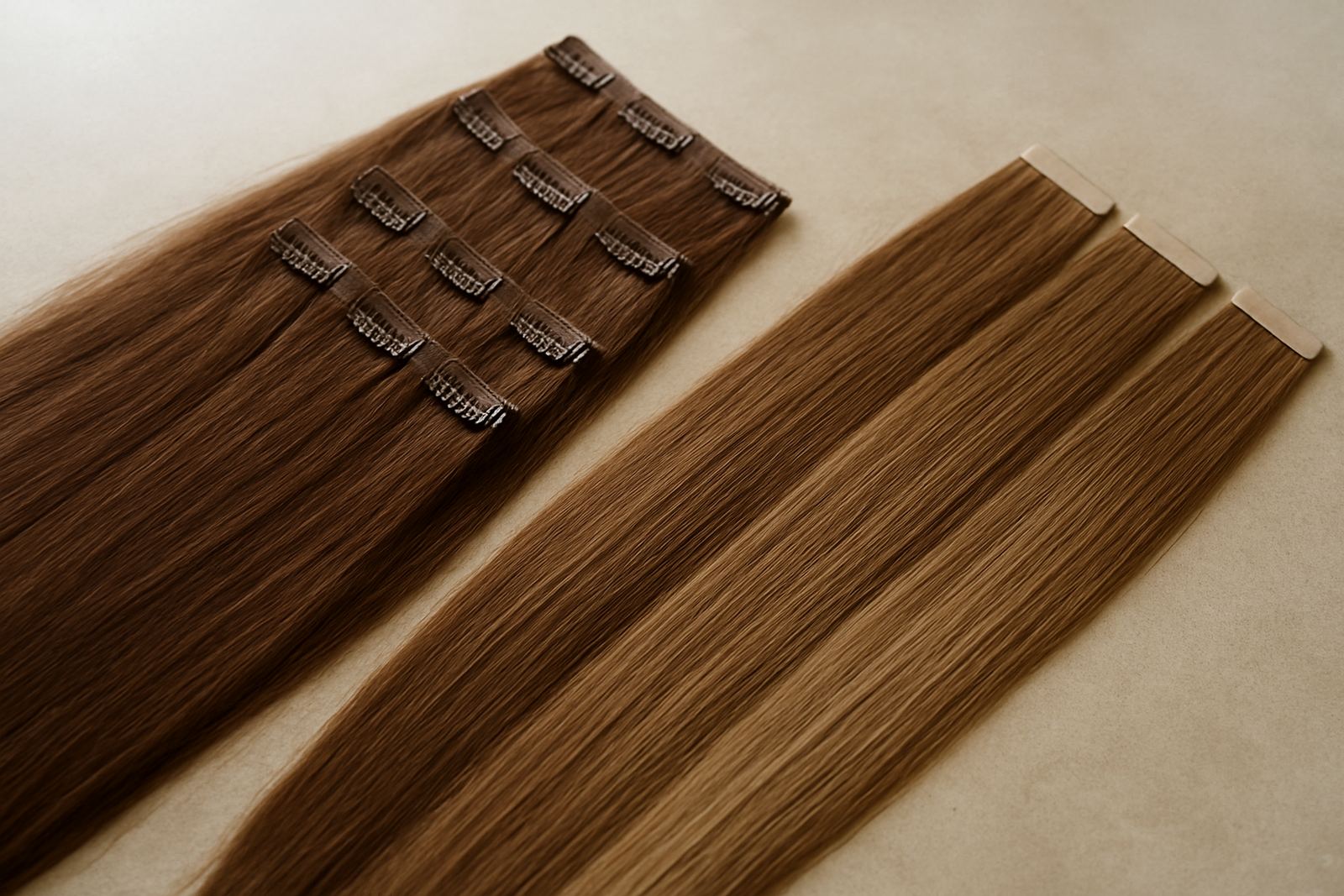
Clip-ins are temporary pieces attached with small clips, so you can put them in before an outing and remove them again at night. Tape-ins are fitted by a hair professional using thin adhesive tabs that sit close to the scalp and stay in for several weeks with proper care. In simple terms, clip-ins give you flexibility, while tape-ins give you consistency.
For many clients in Umhlanga and Durban North, the first question is not which looks better, but which fits a busy week. If your mornings are rushed, you live in and out of the office, or you need hair that stays put through a full day, tape-ins often make more sense. If you only want extra length for Friday dinner, a wedding, or a shoot in Ballito, clip-ins can be the easier option.
- Clip-ins: quick to use, no long-term commitment
- Tape-ins: fitted once, worn daily for weeks
- Both: best when matched to your hair type and routine
When clip-ins are the practical choice
Clip-ins are ideal when you want control. You can add volume at the crown, extra fullness at the ends, or length for a special event, then take them out before bed. That makes them useful for women who do not want anything in the hair every day, or whose work and family schedule changes week by week. They are also helpful if you like to switch styles often, because you can wear them only on the days you need them.
They need less salon time than tape-ins, and there is no ongoing maintenance appointment. You still need to brush them gently, store them properly, and keep heat styling sensible, because tangling and dryness can shorten their life. In coastal areas like Umhlanga and La Lucia, where humidity is part of daily life, clip-ins may be easier to manage because you can remove them before the frizz becomes a problem.
- Best for occasional wear and events
- Good for first-time extension users
- Easy to remove before sleep, gym sessions or swimming
When tape-ins make daily styling easier
Tape-ins suit women who want a more settled routine. Once fitted, they lie flat against the head and blend well with natural hair when the colour and texture are matched correctly. That can make them feel more secure for day-to-day wear, especially if you are heading to work, school runs, meetings, or weekend plans in Durban West and Hillcrest.
The main appeal is time. You do not clip pieces in and out every morning, and the finish can look neat with very little effort. Tape-ins do need professional fitting and regular upkeep, usually every few weeks depending on growth and care. You must avoid heavy oils near the attachment points, and you need to wash and dry the hair with care so the adhesive remains in good condition. If you are the type who prefers one routine that stays the same, tape-ins can save a lot of faff.
- Best for regular, everyday wear
- Sits flatter and can feel more natural on the head
- Needs follow-up maintenance and proper aftercare
Maintenance, wear time and cost over the month
Clip-ins usually cost less upfront and can last well if they are looked after properly, but they only give value when you wear them often enough. Tape-ins can cost more at the start because fitting and follow-up service matter, yet they spread that cost over weeks of daily wear. So the better value is not always the cheaper box on the day, it is the option you will actually use.
Here is a straightforward way to compare them:
- Clip-ins: lower commitment, simple upkeep, wear only when needed
- Tape-ins: higher starting cost, more upkeep, better for frequent wear
- At home care: clip-ins are stored after use, tape-ins stay in and need regular washing and gentle drying
- Time: clip-ins take a few minutes to fit, tape-ins save time once installed
If load-shedding hits during your normal hair routine, clip-ins can be the easier option because you are not dependent on constant styling every day. Tape-ins can still work well, but you need to plan washing and drying a bit more carefully so you do not leave the hair damp for too long.
Choosing by hair type, lifestyle and local weather
The right extension depends on your own hair and how you live. Fine hair often needs careful matching so attachments do not show, and tape-ins can work well when fitted neatly. Thicker hair may hold clip-ins well, especially for a fuller look at events. If your hair is fragile, a private consultation helps decide which method places less strain on your own strands.
Weather also plays a part. Durban humidity can affect smooth blow-dries, especially along the coast and on damp mornings. If you are commuting from Phoenix or Amanzimtoti and you know your hair changes with the weather, you may prefer the predictability of tape-ins or the flexibility of clip-ins depending on how often you want to style. For many clients, the decision comes down to whether they want one reliable daily look or a changeable option for selected days.
- Fine hair: needs careful colour and attachment matching
- Thicker hair: often suits fuller clip-in sets
- Coastal humidity: ask for advice on blending and aftercare
A simple Durban example to make the choice clearer
Consider two clients from Umhlanga. One works long hours and needs her hair to stay polished from morning until evening, with no time to clip pieces in before leaving home. Tape-ins suit her because they blend into her routine and reduce daily styling. The other attends functions some weekends, wants extra length for photos, and prefers to keep her natural hair completely free during the week. Clip-ins suit her better because she can wear them only when needed.
That is the key point: the best extension is the one that supports your routine, not the one that sounds most exciting on paper. If you are unsure, start with a consultation and talk through your hair goals, how often you want to wear the extensions, and how much time you want to spend on maintenance. A proper colour match and fitting advice can save you money and frustration later on.